

What Does a Commercial Fire Alarm System Include? A Guide for Missouri Businesses
What Does a Commercial Fire Alarm System Include? A Guide for Missouri Businesses
A commercial fire alarm system is made up of multiple components that work together to detect potential fire conditions, alert building occupants, and communicate alarm signals. The equipment needed can vary considerably depending on the building, occupancy, layout, and system design.
At AMC Fire Protection Services, we bring nearly 20 years of hands-on experience in the electrical and commercial fire alarm industry. We install, service, troubleshoot, program, and repair commercial fire alarm systems, giving us practical experience with the equipment and components that make these systems work.
That experience gives us a practical perspective on what goes into a commercial fire alarm system and how its individual components work together as one system for businesses in Springfield, Nixa, and other communities in Southwest Missouri.
Table of Contents
- What Is a Commercial Fire Alarm System?
- What Components Are Included in a Commercial Fire Alarm System?
- Fire Alarm Control Panel
- Smoke and Heat Detectors
- Manual Pull Stations
- Notification Appliances
- Duct Detectors
- Batteries and Power Supplies
- Fire Alarm Monitoring
- How Do Commercial Fire Alarm System Components Work Together?
- When Does a Business Need a New Fire Alarm System?
- Frequently Asked Questions
- Talk to AMC About Your Commercial Fire Alarm System
What Is a Commercial Fire Alarm System?
A commercial fire alarm system is a coordinated system of devices and equipment designed to detect indications of fire and provide notification when an alarm condition occurs.
Unlike a standalone smoke detector in a home, a commercial fire alarm system can involve numerous interconnected components throughout a building. Depending on the property, these may include detection devices, manual pull stations, notification appliances, a fire alarm control panel, power supplies, batteries, duct detectors, and monitoring.
The purpose of the system is to provide a way to detect an alarm condition, communicate that condition through the building's notification devices, and perform other programmed functions as required by the system design.
What Components Are Included in a Commercial Fire Alarm System?
Not every commercial fire alarm system includes exactly the same equipment.
A small commercial property may have a relatively straightforward system, while a larger building may require numerous devices and additional system functions. The property's layout, occupancy, size, existing systems, and applicable requirements all play a role in determining what equipment is appropriate.
Common commercial fire alarm system components include:
- Fire alarm control panels
- Smoke detectors
- Heat detectors
- Duct detectors
- Manual pull stations
- Notification appliances
- Batteries and power supplies
- Initiating devices
- Monitoring equipment and services
- Other connected or auxiliary equipment
Fire Alarm Control Panel
The fire alarm control panel is one of the central components of a commercial fire alarm system.
It receives signals from devices throughout the system and provides information about the system's status. Depending on the system, the panel can indicate alarm conditions, trouble conditions, supervisory conditions, and other information.
The control panel also communicates with other parts of the fire alarm system. When a device detects a condition that requires an alarm, the panel processes the signal and activates the appropriate programmed responses.
Smoke and Heat Detectors
Smoke and heat detectors are examples of automatic initiating devices that can detect conditions associated with fire.
Smoke Detectors
Smoke detectors are designed to detect smoke and initiate an alarm condition when their detection criteria are met.
The type and placement of smoke detectors depend on the building and system design. A commercial fire alarm system may use smoke detectors in offices, corridors, common areas, or other locations where they are appropriate for the property's needs.
Heat Detectors
Heat detectors respond to heat rather than smoke.
They can be used in locations where a smoke detector may not be appropriate because of environmental conditions or other factors. The type of heat detector and its placement depend on the application and system design.
The important point is that there isn't one detector configuration that works for every commercial building. The devices used should be appropriate for the space and the overall fire alarm system.
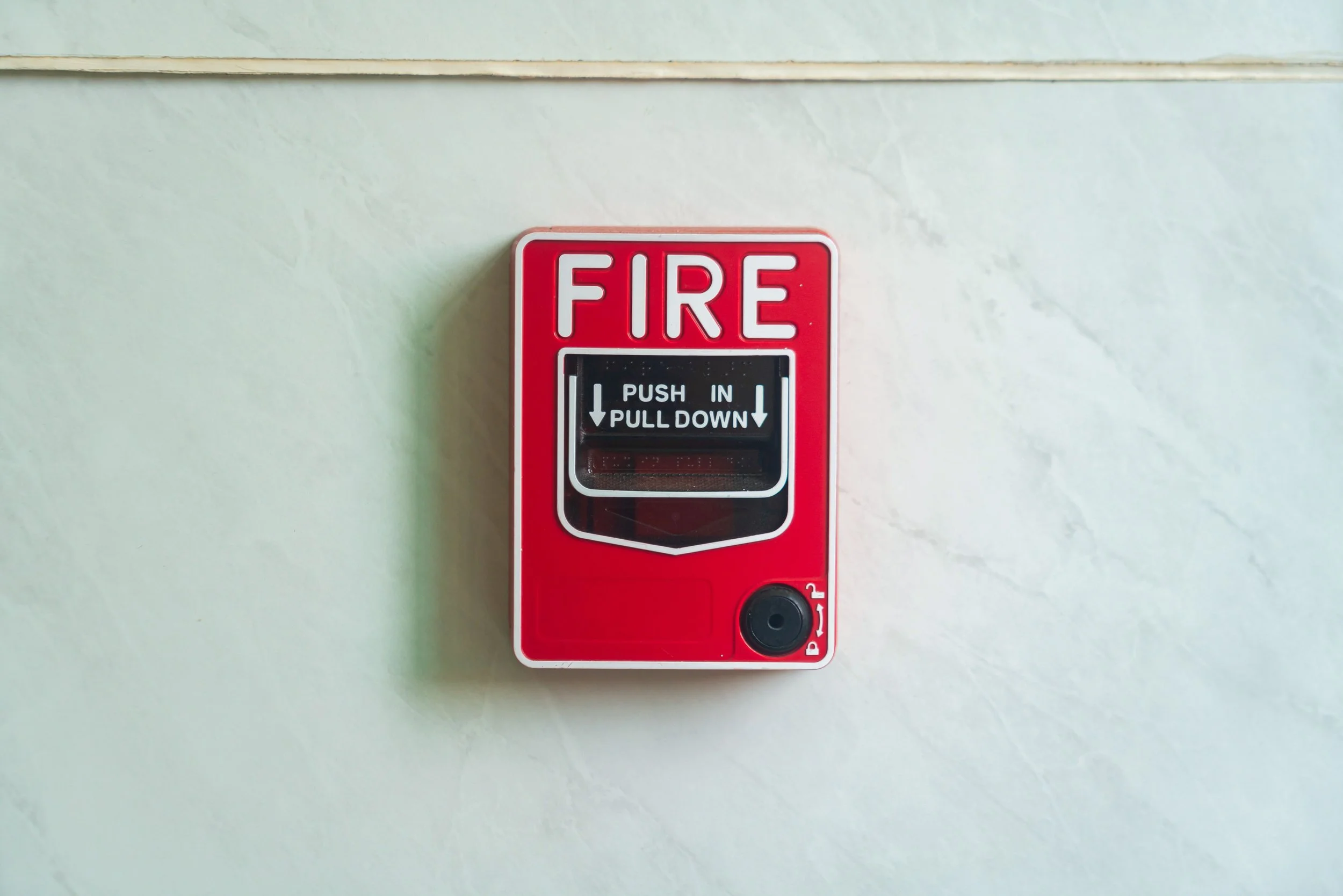
Manual Pull Stations
Manual pull stations provide building occupants with a way to manually initiate a fire alarm.
If someone discovers a fire or another condition requiring an alarm before an automatic detection device activates, a manual pull station can provide another way to initiate the system.
Pull stations are an important part of many commercial fire alarm systems and are included in the inspection and testing process.
At AMC, we inspect and test system components to help identify problems that could affect the system's ability to operate as intended.
Notification Appliances
A fire alarm system doesn't just need to detect an alarm condition. People in the building also need to be notified.
Notification appliances provide that warning.
Depending on the system, notification can include audible and visual devices such as:
- Horns
- Strobes
- Horn/strobes
- Other approved notification appliances
The type and placement of notification appliances depend on the building and system design.
During inspection and testing, these devices can be evaluated to identify problems that could affect proper notification.
For a business owner in Springfield or a property manager in another Southwest Missouri community, it's important to understand that notification is a critical part of the overall fire alarm system—not simply an optional add-on.
Duct Detectors
Duct detectors are another component that may be included in a commercial fire alarm system.
These devices are associated with building HVAC systems and can detect smoke moving through air-handling equipment.
Duct detectors are different from standard room smoke detectors and serve a specific purpose within the building's fire protection system.
Because they are connected to the building's HVAC system and fire alarm system, they are an important component to consider during inspection, testing, and maintenance.
Batteries and Power Supplies
A commercial fire alarm system needs reliable power to operate.
In addition to its primary power source, a fire alarm system can have batteries and other power supply equipment that support system operation when primary power is interrupted or unavailable.
During service, battery or power supply problems may be identified as deficiencies that require attention.
At AMC, we evaluate batteries, power supplies, and other system components as part of applicable inspection and testing services.
Fire Alarm Monitoring
Some commercial fire alarm systems are connected to a fire alarm monitoring service.
Monitoring provides another layer of communication by transmitting applicable fire alarm signals to a monitoring provider. AMC provides 24-hour, 365-day fire alarm monitoring through its affiliate monitoring provider.
Monitoring is designed to communicate signals from the system, while inspection and testing help evaluate whether the system and its components are operating properly.
We coordinate monitoring-related testing, signal verification, troubleshooting, and restoration when needed.
How Do Commercial Fire Alarm System Components Work Together?
A commercial fire alarm system is most effective when its individual components work together as a coordinated system.
For example, a smoke detector may detect smoke and send a signal to the fire alarm control panel. The control panel processes that signal and activates the appropriate notification appliances. If the system is monitored, the applicable signal can also be transmitted to the monitoring provider.
The exact sequence and functions depend on the system design and programmed features.
This is one reason professional installation and ongoing service matter. Installing individual devices isn't enough. The components need to be properly connected, programmed, tested, and maintained as part of the overall system.
When Does a Business Need a New Fire Alarm System?
There isn't one answer that applies to every business.
A new commercial fire alarm system may be appropriate for a new construction project, a newly occupied building, a major renovation, or a property that needs a new or substantially upgraded system.
An existing system may also need changes when the building's use, layout, or requirements change.
In other situations, an existing system may simply need inspection, maintenance, troubleshooting, or repairs rather than complete replacement. Wondering how often your commercial fire alarm system should be inspected and tested? Read our guide, to learn more about inspection schedules and requirements.
Before deciding that a system needs to be replaced, we recommend evaluating the existing system, the building, its current needs, and the applicable requirements.
For businesses in Nixa, Springfield, Ozark, Branson, Joplin, Rolla, and surrounding areas, AMC can help evaluate the fire alarm service needs of an existing property or discuss requirements for a new project.
Frequently Asked Questions
What components are included in a commercial fire alarm system?
A commercial fire alarm system may include a fire alarm control panel, smoke detectors, heat detectors, duct detectors, manual pull stations, notification appliances, batteries, power supplies, initiating devices, monitoring, and other connected equipment. The exact components depend on the building and system design.
How does a commercial fire alarm system work?
Devices such as smoke detectors, heat detectors, and manual pull stations can initiate an alarm condition. The fire alarm control panel receives and processes the signal, then activates the appropriate programmed functions, which may include notification appliances and monitoring signals.
Does every commercial building need the same fire alarm equipment?
No. Commercial fire alarm systems vary based on factors such as the building, occupancy, layout, system design, and applicable requirements. A system should be designed and equipped for the specific property.
What is the difference between a fire alarm system and fire alarm monitoring?
The fire alarm system consists of the equipment installed in the building to detect and communicate alarm conditions. Monitoring provides a service that receives applicable signals from the system and follows the appropriate monitoring response procedures.
Can AMC install a new commercial fire alarm system?
Yes. AMC provides commercial fire alarm installation as well as inspection and testing, maintenance, troubleshooting, repairs, programming, device replacement, monitoring, and emergency service.
Talk to AMC About Your Commercial Fire Alarm System
Whether you're planning a new commercial construction project, renovating an existing property, or need help with an existing fire alarm system, AMC Fire Protection Services can help you understand your options and determine what service your property needs.
We provide commercial fire alarm installation, inspection and testing, maintenance, troubleshooting, repairs, monitoring, and 24-hour emergency service throughout Southwest Missouri and surrounding areas.
If you're planning a fire alarm installation or aren't sure whether your existing system needs service, contact AMC Fire Protection Services to discuss your project or request a free estimate.
Need emergency fire alarm service? Call 417-371-0256 for 24-hour emergency service.